How hard is Las Vegas water?
The Las Vegas Valley Water District puts the valley's water at about 280 to 291 parts per million, or 16 to 17 grains per gallon, and categorises it as “very hard.” The minerals are calcium and magnesium, carried into Lake Mead from the Colorado River.
The water district is clear that hardness isn't a health issue. It's a nuisance, and in its words it “can leave a chalky build-up” on surfaces.
Where it shows up in a kitchen or bath
Mineral spots form where water sits and dries. In practice that means:
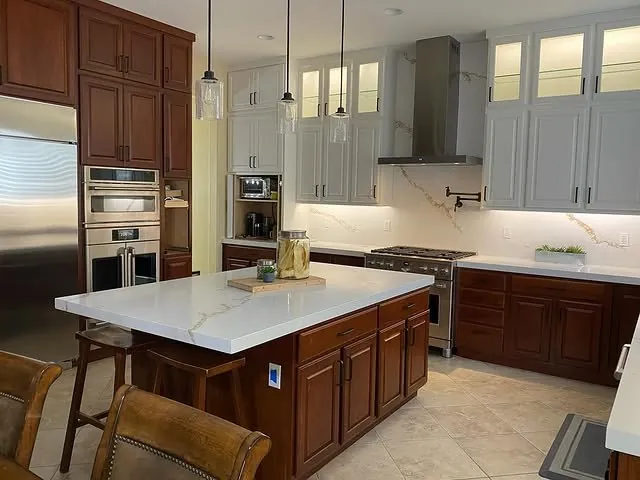
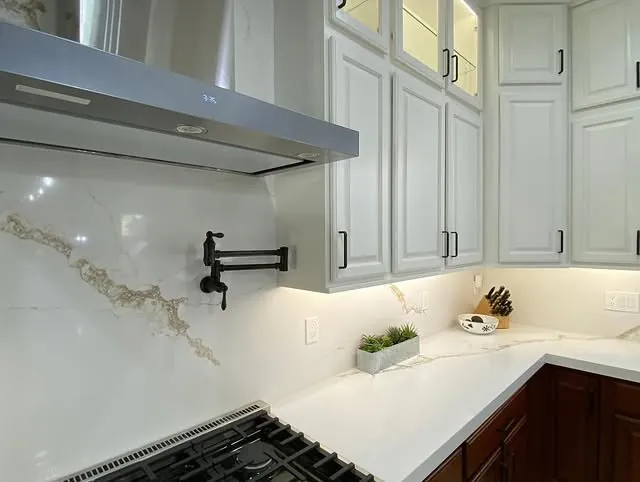
- The counter around and behind the faucet.
- Faucet and fixture finishes, especially dark or polished ones.
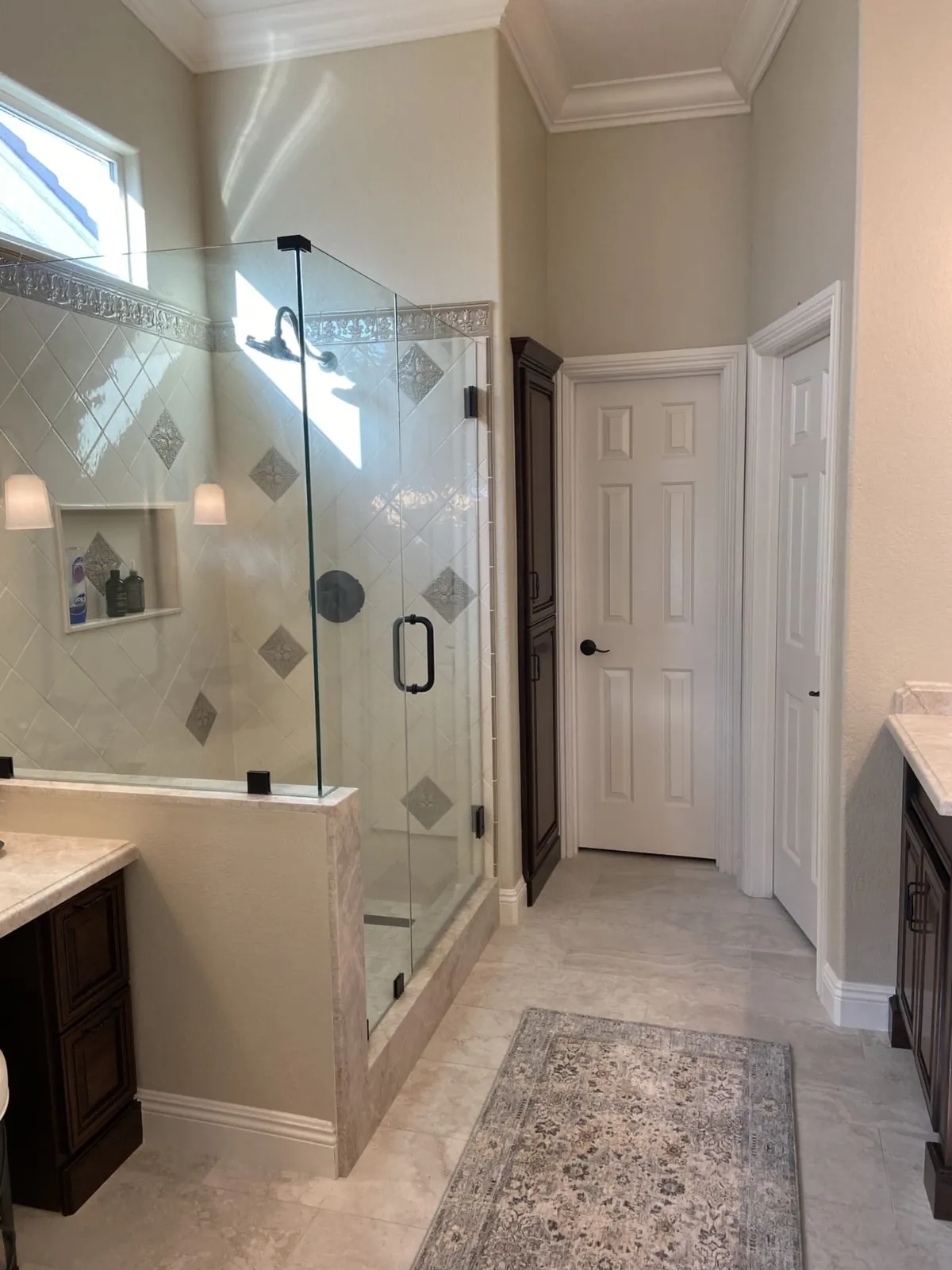
- Glass shower doors and tile grout.
- The sink itself, and the inside of the dishwasher.
Planning for it
There's no surface that's immune, but some choices make life easier. Talk through how each countertop material and finish cleans up before you choose, not after. Consider where the faucet sits: a faucet tight against a backsplash leaves a hard-to-reach strip. Think about fixture finishes you're happy to wipe down.
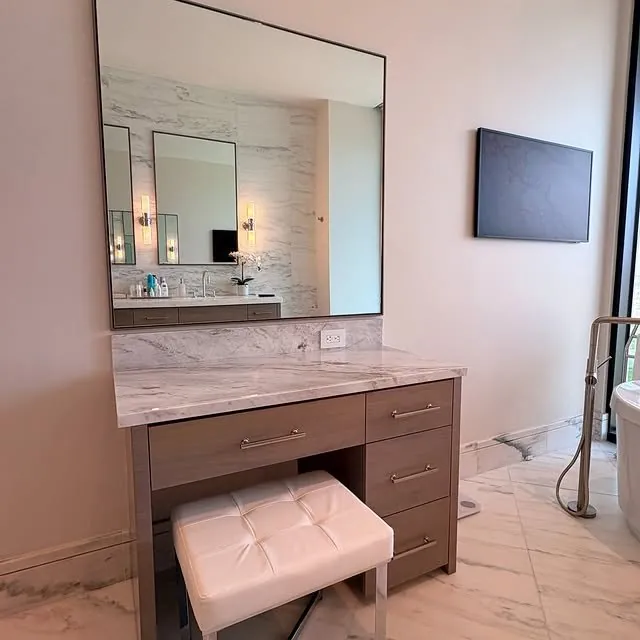
In bathrooms, the same thinking applies to shower glass and the vanity top. Judy chooses stone and finishes with clients during design, so these trade-offs are part of the conversation rather than a surprise.
Softeners, filters and permits
Many homeowners fit a water softener. Note that the City of Las Vegas lists installing or replacing a water softener among the plumbing work that needs a permit, while installing a water filter doesn't. The water district also points out that simple carbon filters “do not remove hardness.”
If a softener is part of your plan, decide early: it affects plumbing and possibly the order of work.
Rules change and differ by jurisdiction. This guide is general information, not legal advice: confirm with your building department and the Nevada State Contractors Board for your project.