The city's simple rule
The City of Las Vegas Building & Safety Department publishes a homeowner's guide called “When do I need a permit?” It gives four general triggers. A permit is required:
- If you add to the structure or add a new structure.
- If you affect the “envelope” of the structure, or plainly, if you open up the interior or exterior walls.
- For other than routine maintenance and service, if you work on or add to the building's mechanical, electrical or plumbing systems.
- If you reconfigure an existing room into something new.
Kitchen work that doesn't need a permit
The guide lists “painting, papering, tiling, carpeting, cabinets, countertops, interior wall, floor or ceiling covering, and similar finish work” as not needing a permit. Under plumbing it also lists repairing or replacing a sink, repairing or replacing a faucet (if not concealed in a wall), and resurfacing or replacing countertops.
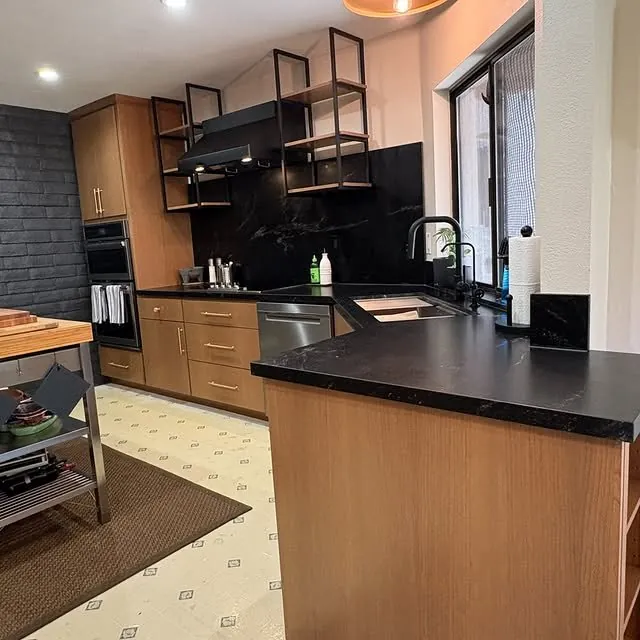
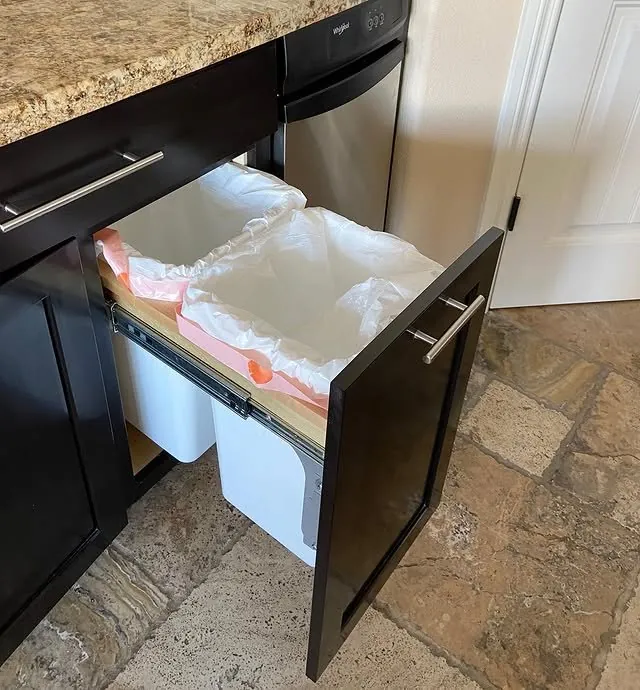
That covers a lot of what people picture as a kitchen remodel: new cabinet boxes and doors in the same layout, new counters, a new backsplash, new paint. A kitchen refresh like adding pull-outs, spice storage or new uppers in a butler's pantry usually sits here too.
Kitchen work that does need a permit
The same guide says a permit is required to:
- Move, remove, or add walls, or cut in or widen a window or door opening.
- Install or alter any permanent wiring, or run additional wiring for an outlet or light fixture.
- Alter piping inside a wall, ceiling or beneath a floor, or relocate existing plumbing in a remodel.
- Install, alter or repair gas piping between the meter and any appliance.
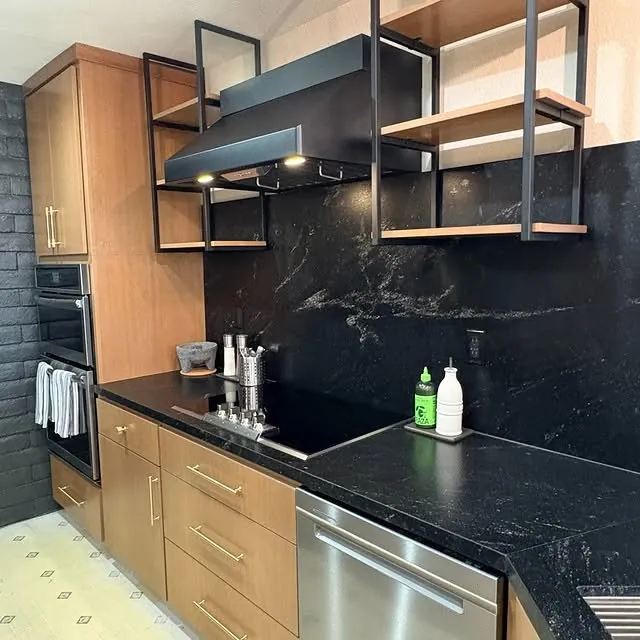
- Install kitchen range exhausts and appliances that are required to be vented.
- Install or replace a water heater or a water softener.
What that means when you plan a kitchen
The line between “no permit” and “permit” usually falls where the layout changes. Keep the sink, range and walls where they are and much of the work is finish work. Take a wall out, move the sink to the island or add a vented hood, and the project needs permits, inspections and the right licensed trades.
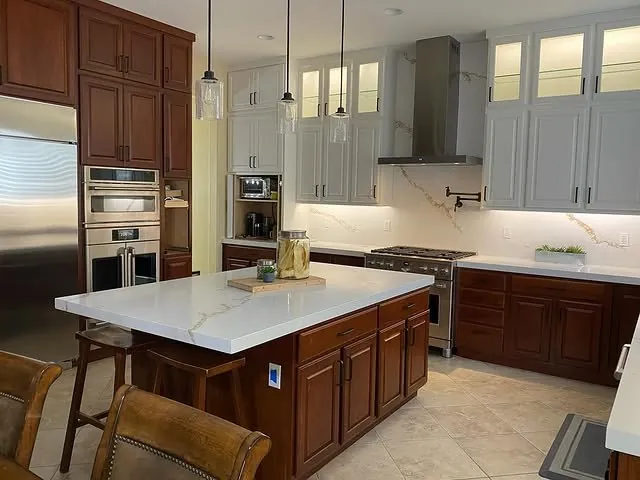
Neither is wrong. One Las Vegas kitchen Judy designed took a wall out and closed up a sliding door to make room for more than one cook: that's permitted work, and worth it. The point is to know which kind of project you're planning before you price it, so the scope, the trades and the timeline are honest from the start.
Henderson and unincorporated Clark County
The guide above is the City of Las Vegas's. Henderson, North Las Vegas, Boulder City and unincorporated Clark County (which includes areas like Spring Valley and Whitney) each run their own building departments. Southern Nevada jurisdictions work from shared building codes, so the rules are often similar, but don't assume: check with the department for your address before work starts.
The city's guide says the same thing in its own words: “We cannot over-emphasize the need to check with your local building department.”
Who can do permitted plumbing and electrical work
The City of Las Vegas guide is direct about this:
“Along with homeowners working on their own homes, only licensed plumbers and electricians are legally allowed to do plumbing or electrical work in Nevada.”
Rules change and differ by jurisdiction. This guide is general information, not legal advice: confirm with your building department and the Nevada State Contractors Board for your project.